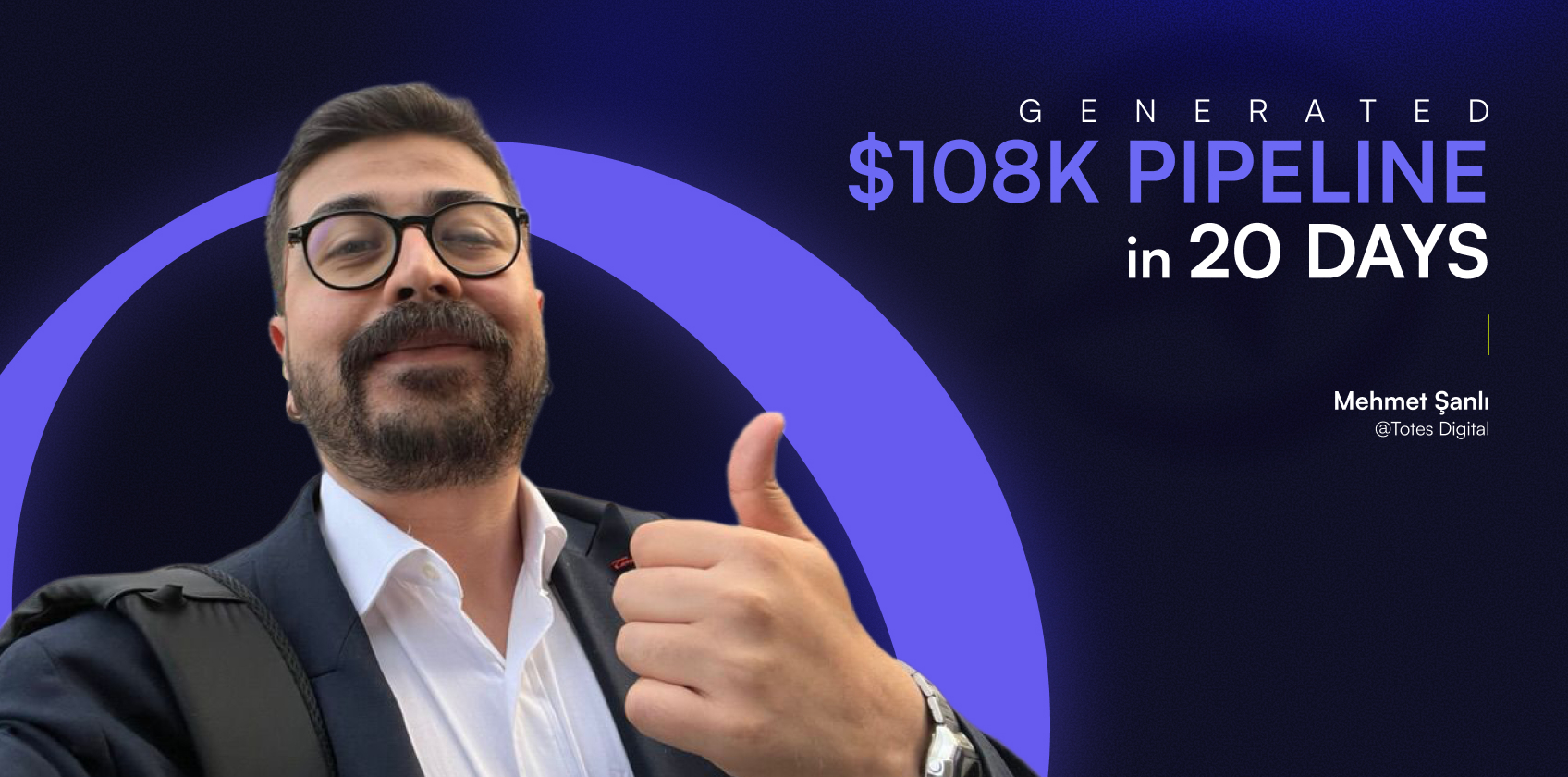
Most LinkedIn outreach campaigns are unpredictable. Some days you get replies, some days nothing. Some campaigns work, others completely stall. Before this setup, everything was handled manually — checking who accepted, finding emails, switching channels, managing follow-ups. It worked, but it wasn't scalable.
The campaign was built as a structured LinkedIn-first system that adapts based on how leads behave. Instead of sending messages and hoping for replies, every step was designed with a fallback. If one path didn't work, the flow continued in another direction. The entire process was turned into a repeatable system and automated inside Cold Navigator.
This playbook is based on a real campaign executed by Mehmet Sanli, Co-Founder of Totes Digital. Totes Digital is an SEO and growth agency helping companies build scalable acquisition systems.
What made this campaign different
When Mehmet shared the results of this campaign, what stood out wasn't just the numbers — it was the consistency. The campaign didn't rely on volume or luck. It was built as a structured LinkedIn-first system that adapts based on how leads behave. Instead of sending messages and hoping for replies, every step was designed with a fallback. If one path didn't work, the flow continued in another direction. That's what made the difference.
Prospecting & targeting
The campaign started with clearly defined ICP criteria: relevant decision-maker job titles, company size aligned with the offer, and industry filters based on previous success. Instead of going broad, the targeting stayed tight. This ensured every action was focused on quality rather than volume.
Campaign structure
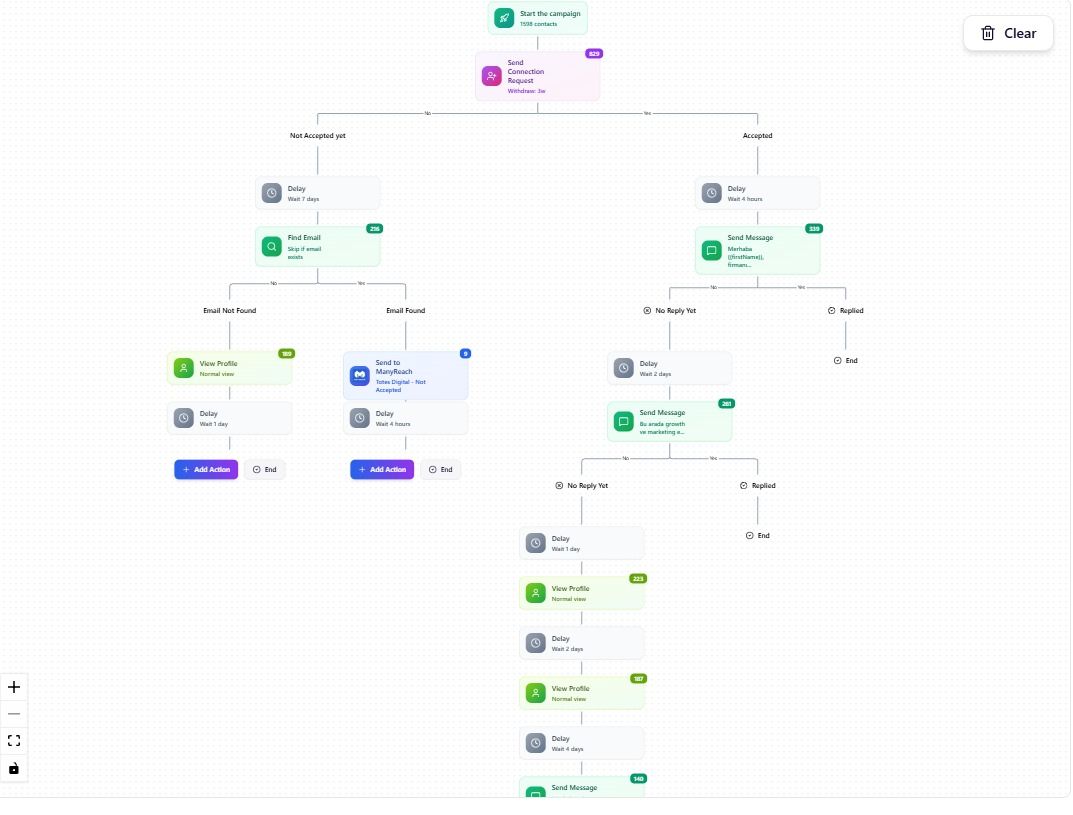
The core of the campaign wasn't messaging — it was structure. Most outreach flows look like this: Request → Message → Follow-up → End. This campaign introduced conditional logic and fallback paths, making it far more resilient than a typical linear sequence.
Step 1 — Connection requests
The campaign begins by sending connection requests to ICP-matched leads. No heavy personalization at this stage. The goal is simple: get accepted.
Step 2 — Conditional flow
Once the request is sent, the flow splits. If accepted, the system continues with LinkedIn messages and starts the conversation. If not accepted, it waits for a defined period and triggers fallback logic.
Step 3 — Email support layer
For leads who don't accept the connection request, the system attempts to find their email. If an email is found, they're sent into an email sequence via tools like Manyreach. If no email is found, the system continues with light LinkedIn touchpoints. This ensures leads are not lost simply because they didn't accept.
Step 4 — LinkedIn touchpoints
For leads without email, the system uses profile visits and light engagement signals. These actions maintain visibility without being intrusive.
Step 5 — Follow-ups
For accepted connections, the system sends an initial message, followed by a follow-up after a delay, and additional follow-ups if there's no response. Instead of stopping early, the system continues to push for engagement.
Step 6 — Adaptive flow
The most important part of the campaign: it doesn't stop. If a lead doesn't accept, doesn't reply, or ignores messages — the system adapts. This is what turns outreach into a pipeline engine instead of a guessing game.
What made this campaign work
Several key factors contributed to the results: structured flow instead of random actions, conditional logic instead of linear outreach, a fallback system instead of dead leads, and consistent follow-ups across the entire process.
Inbox management
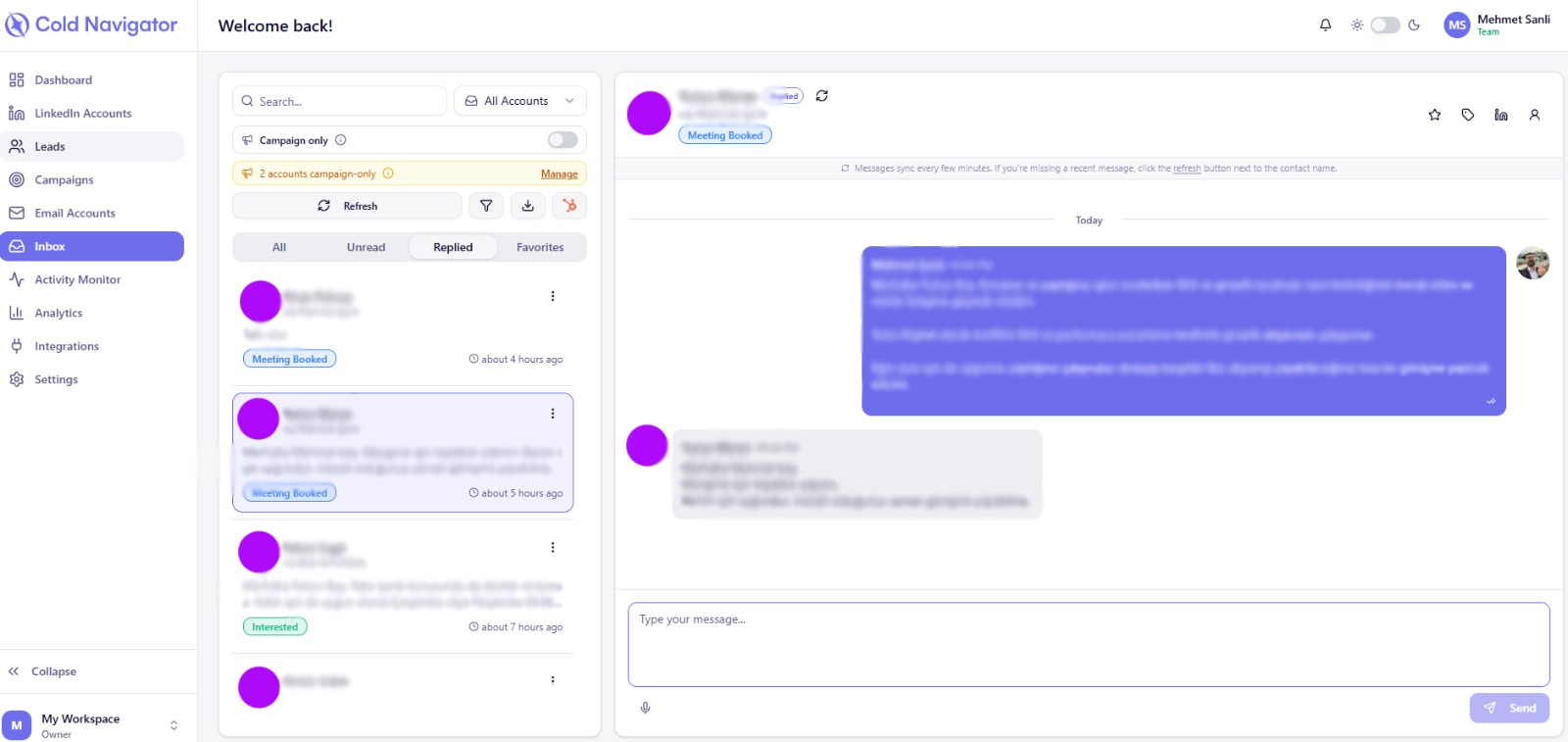
Since the campaign was running across 2 LinkedIn accounts, handling replies manually inside LinkedIn would quickly become inefficient. Instead, the entire inbox was managed directly inside Cold Navigator. All incoming messages and replies were visible in one place, without needing to log into individual LinkedIn accounts. This made it much easier to track conversations, respond faster, keep the flow organized, and avoid missing opportunities.
From manual to system
Before this setup, everything was handled manually: checking who accepted, finding emails, switching channels, managing follow-ups. It worked, but it wasn't scalable. This campaign changed that. The entire process was turned into a repeatable system and automated inside Cold Navigator. What used to take hours per day now runs in the background.
Key takeaway
Outbound isn't about sending more messages. It's about building a system that doesn't break when people don't respond.
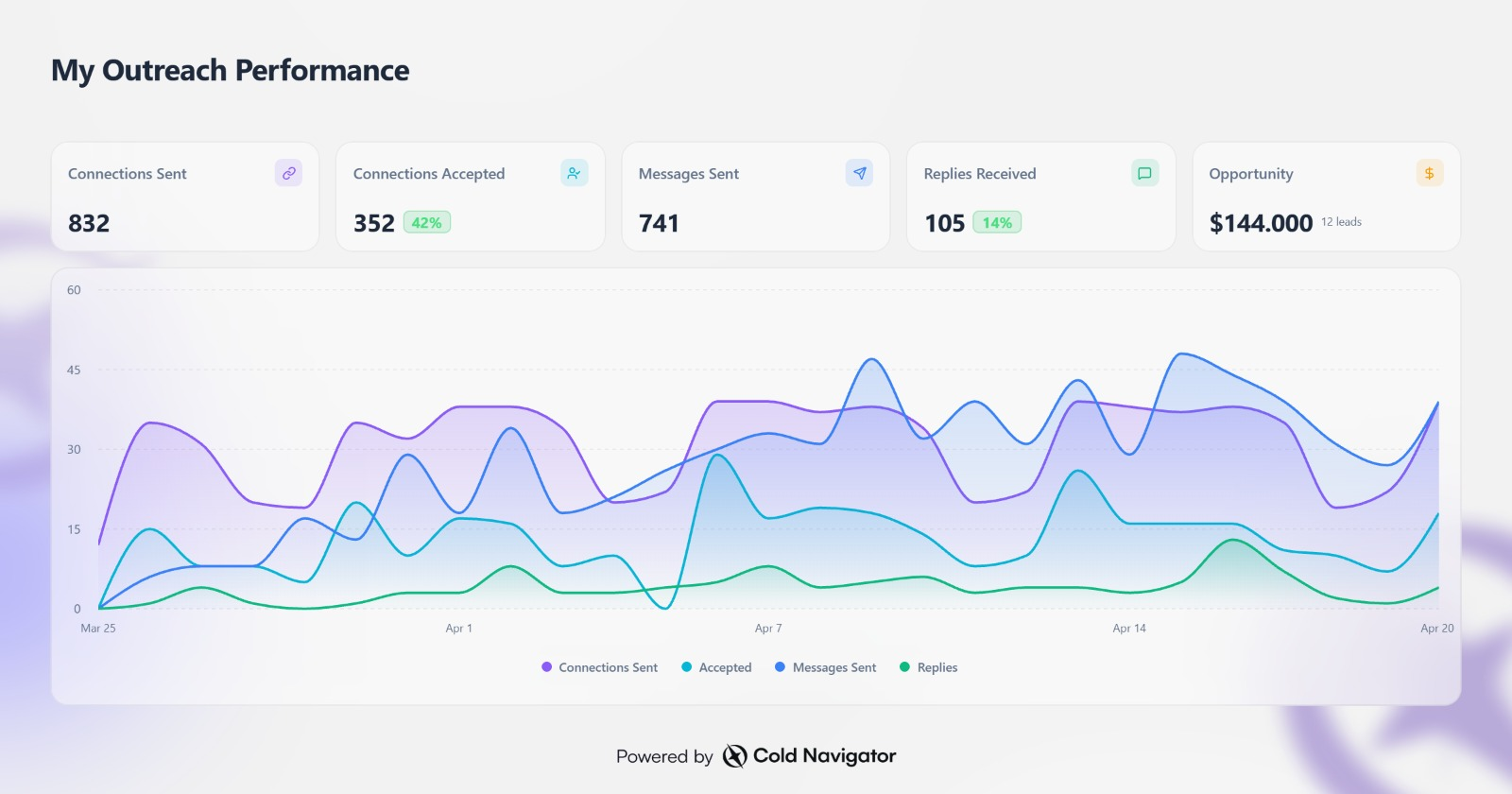
A predictable pipeline engine in 20 days
"Before this, our outreach felt random. This system made it predictable."